Mubo
Client
University project
Project
Product design + UX/UI
Year
2023
Overview
Running out of battery when you're trying to navigate somewhere new is frustrating. Most people deal with this by buying a power bank and carrying it around constantly, even though it mostly sits unused. Product-service systems propose a different model where you access what you need when you need it, rather than owning things that spend most of their time doing nothing.
We designed a rental system where power banks live at charging stations around the city, powered by solar panels. The project included designing the physical products and the app that connects everything, creating a network where you can pick up a power bank at one location and return it at another.
Exploration
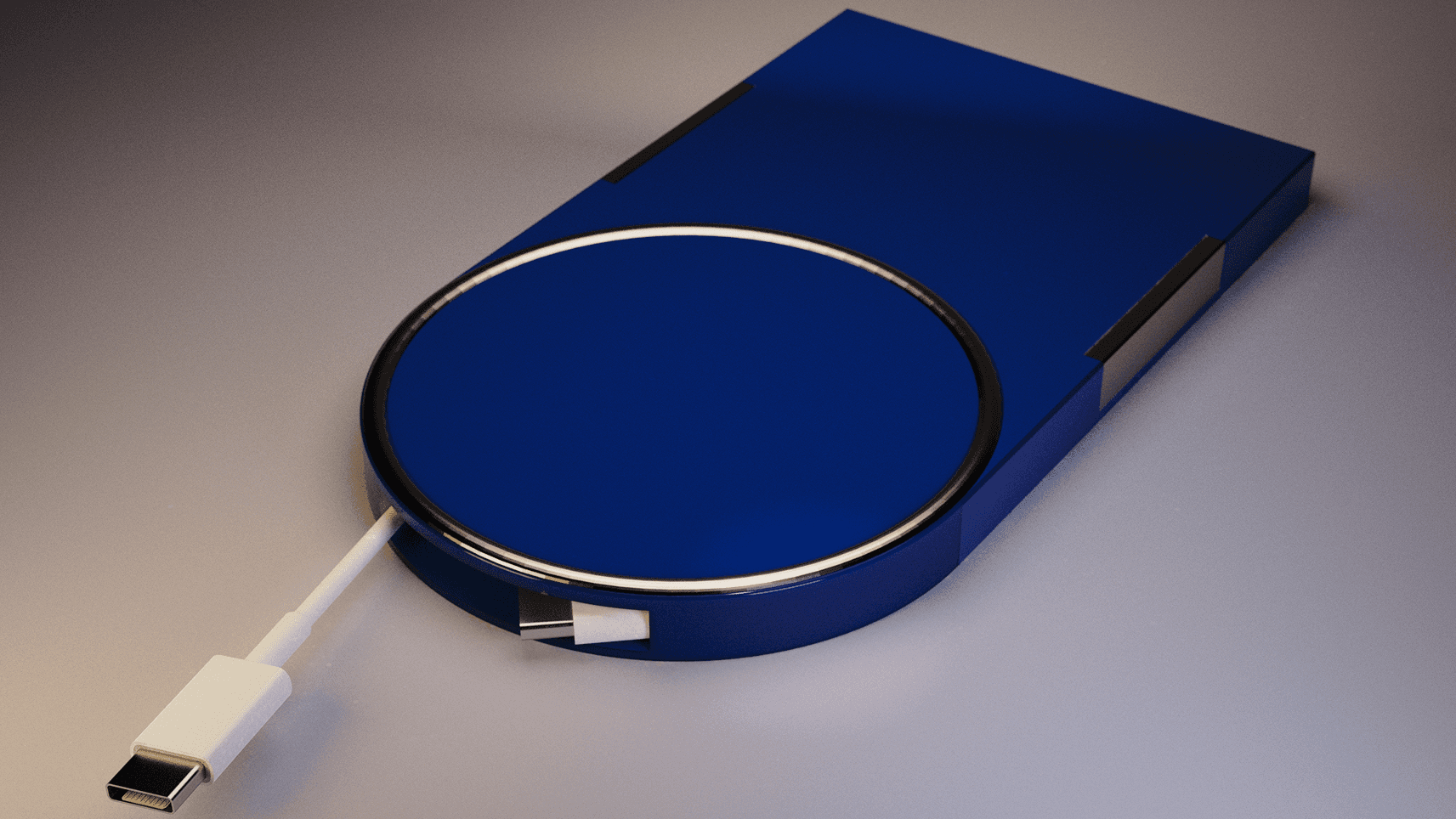
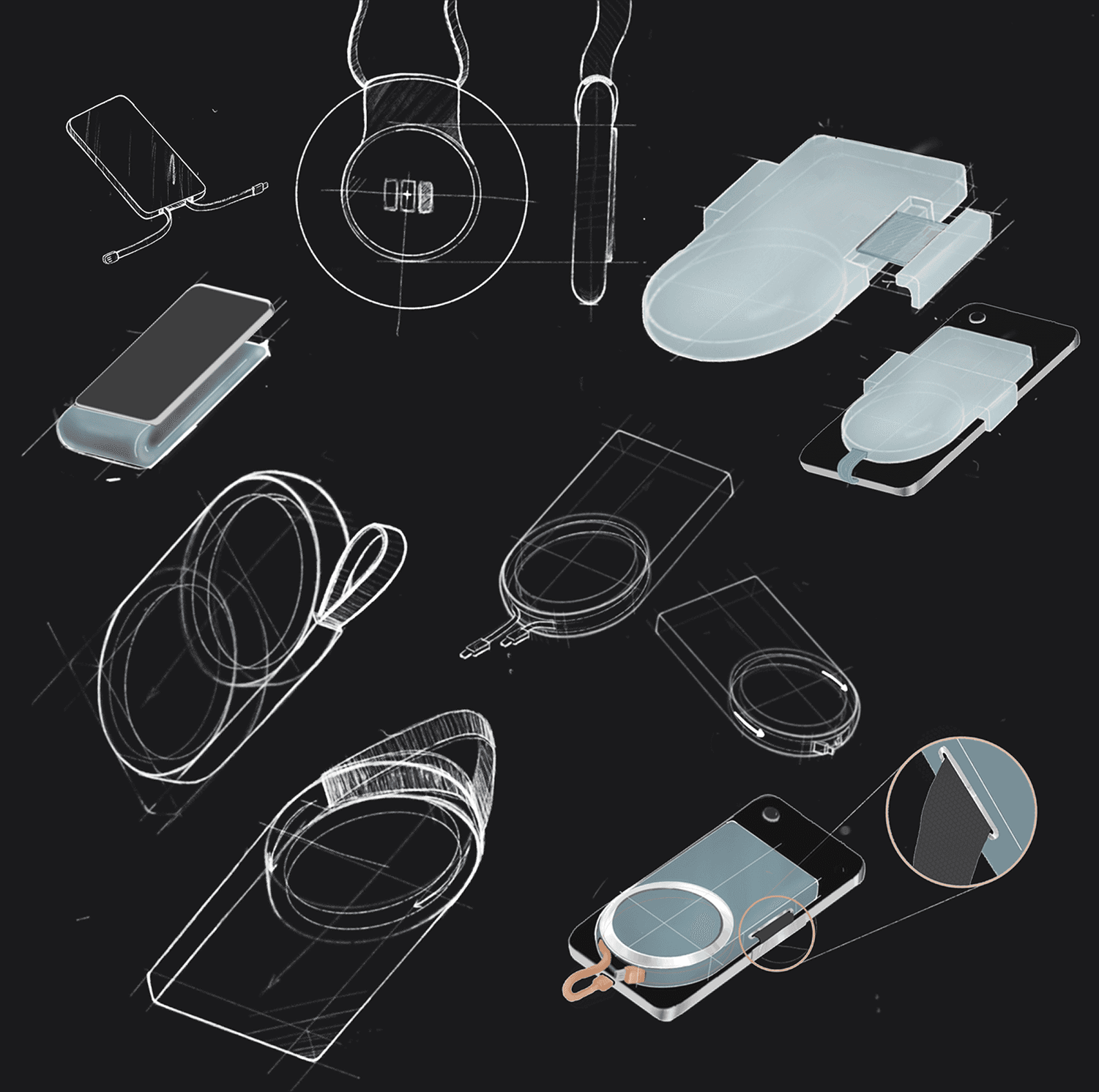
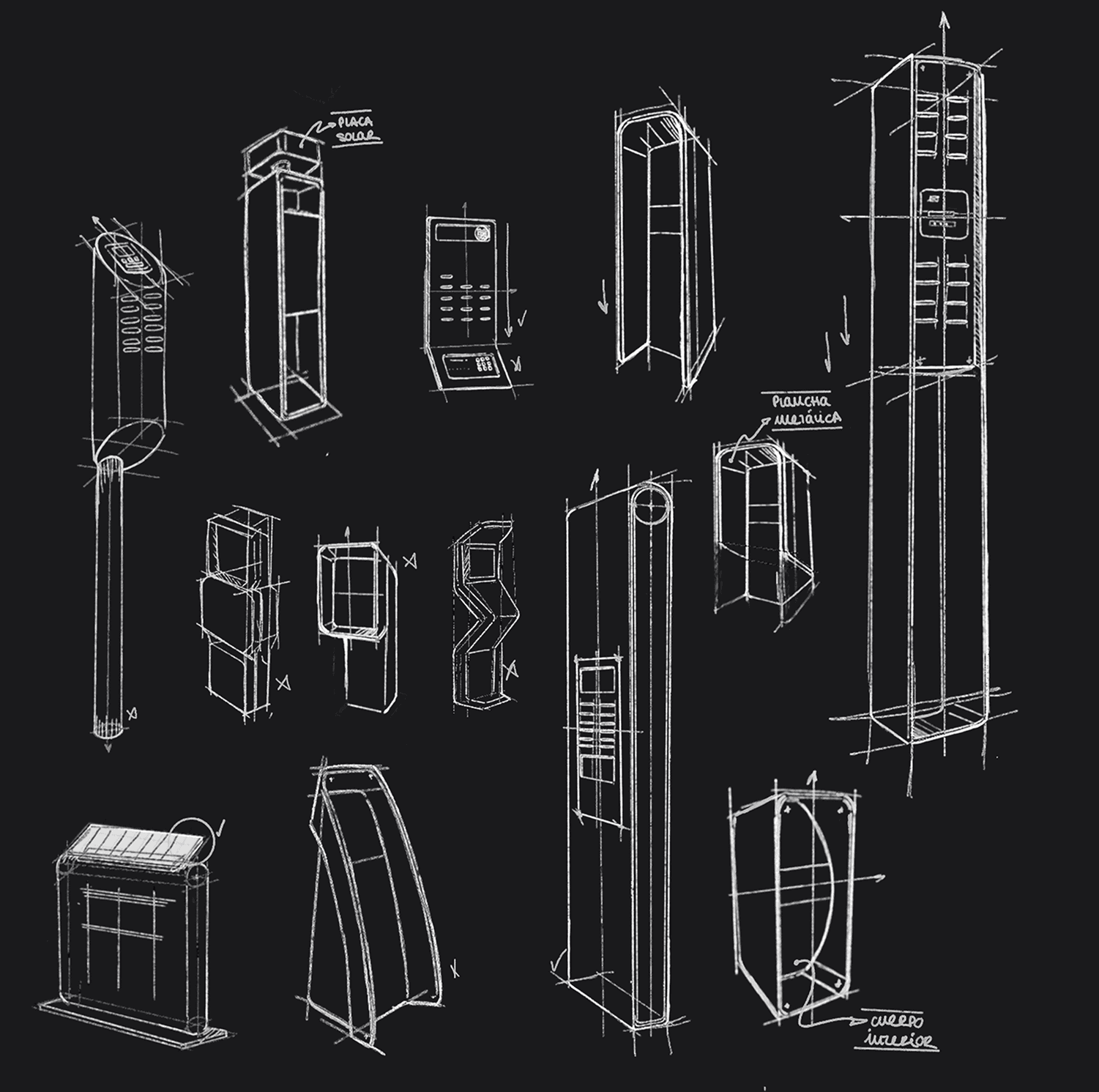
The power bank needed to look and feel good since it stays with users for a while, not just sit in their bag. Through sketching, we worked out details like cable integration and how it would attach to the phone to feel like one device rather than two clunky pieces. The charging station started as a basic locker concept and evolved through iterations into something more refined. Since these would be placed on streets, the priority was creating a design that served its function without adding visual clutter to public spaces.
The Result
We developed three connected parts: the power banks users carry, the charging stations where they're stored, and the app that makes the whole system work. Each part had different requirements, but they all needed to feel like they belonged to the same system.
Solar-powered reliable charging
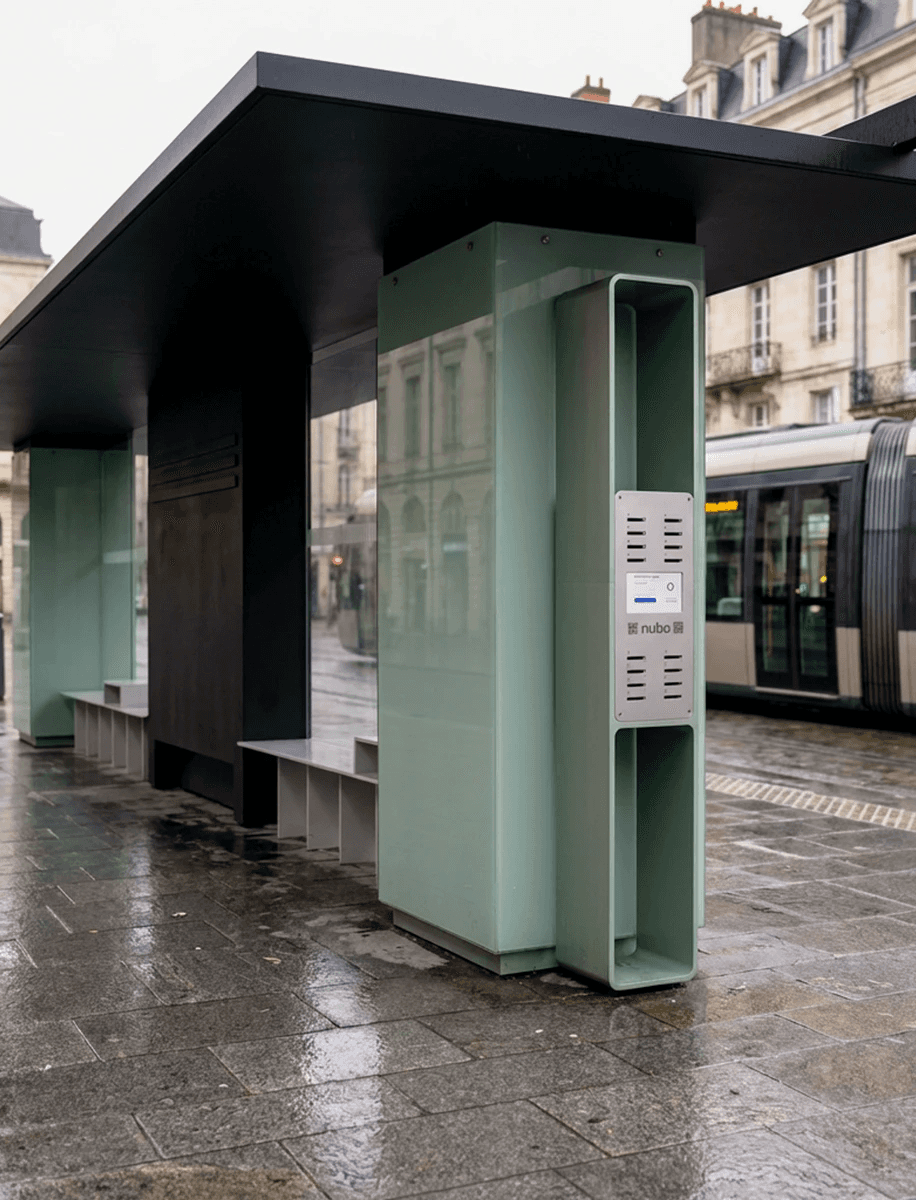
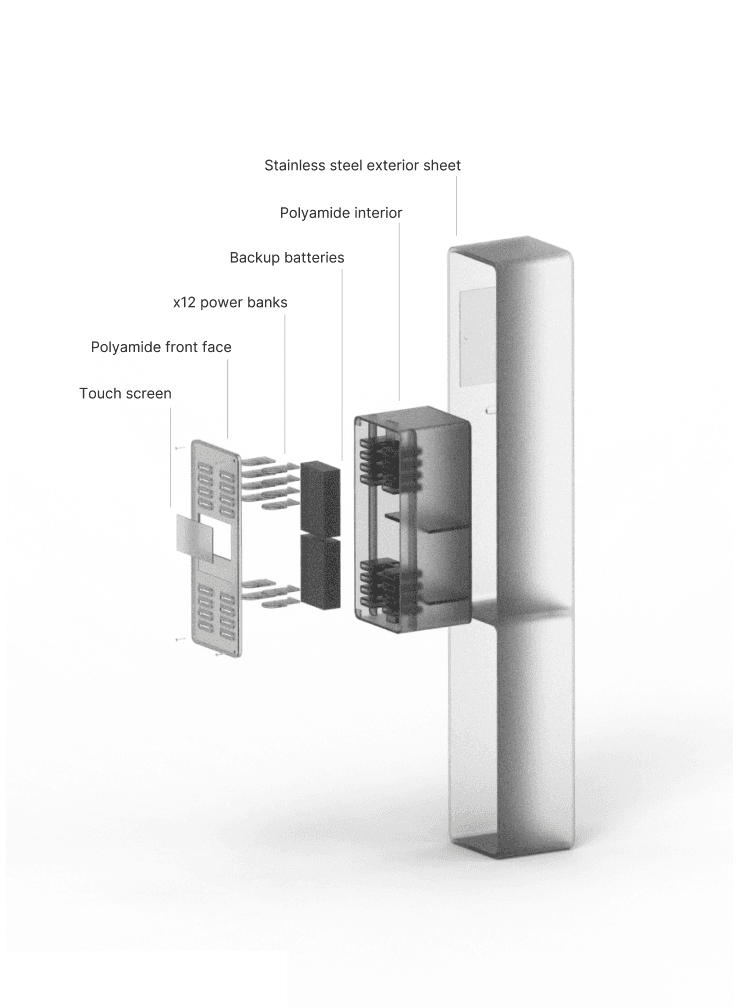
For the power bank itself, we focused on what it's like to actually carry and use it. Most of the sketching work went into figuring out cable integration and how it would attach to your phone without feeling like you're juggling two separate devices. The charging stations were designed to sit at tram stops, where we could integrate solar panels into the shelter roof without adding visual clutter to the street. Each station stores 12 power banks and has backup batteries that collect solar energy during the day, so the system keeps working at night.
Interface design
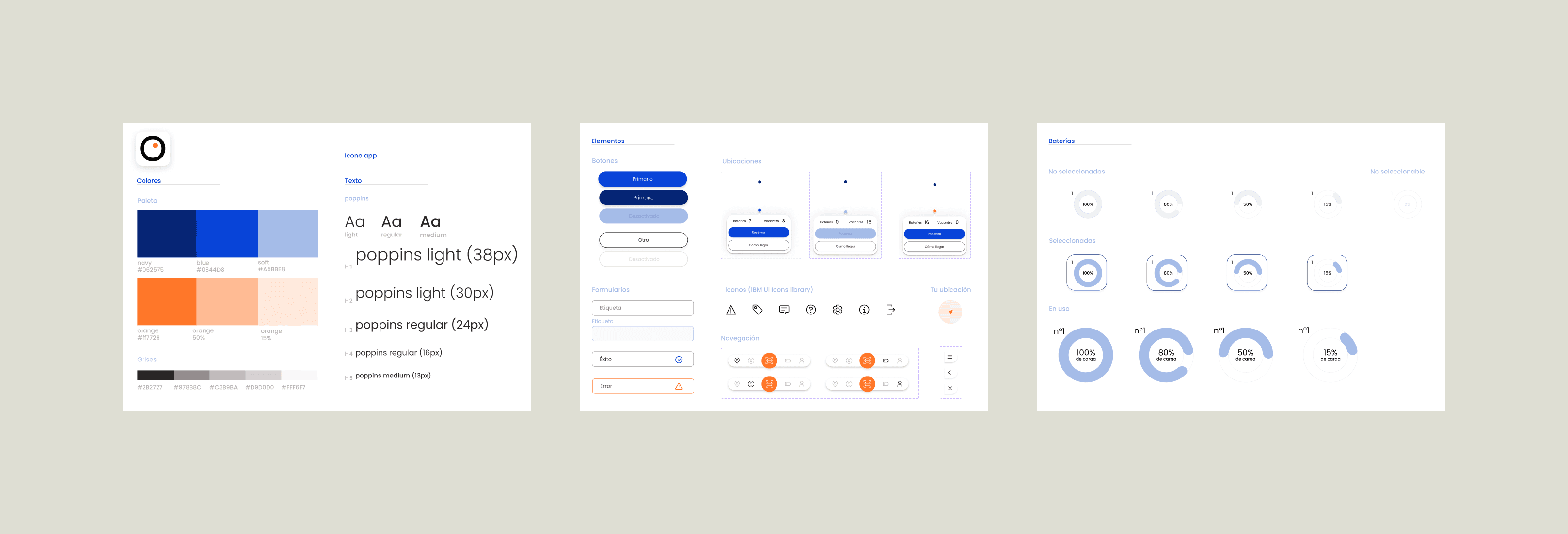
The app is what ties the physical infrastructure together. We built out the full information architecture before touching any visual design, mapping out content, user tasks, and flows. The main actions are finding nearby stations, checking how many power banks are available, and renting one by scanning a QR code or typing in a station number. After creating a high-fidelity prototype in Figma, we ran it through several rounds of user testing to make sure the most important tasks felt straightforward. Try the figma prototype here!