Postcards Aboard

Turning museum visitors into correspondents with passengers from 1912. Master's graduation project for Musealia's Titanic exhibition.

Turning museum visitors into correspondents with passengers from 1912. Master's graduation project for Musealia's Titanic exhibition.

Year

2025

Client

Musealia Exhibitions & Museums

Project

Interaction Design

Overview

Everyone knows the Titanic. It's one of those culturally universal stories. Most people can tell you the ship sank, maybe that there weren't enough lifeboats. But most people know the Titanic from films and media, so the story feels familiar but the familiarity is based on fiction. Visitors come to Musealia's exhibition with strong mental images but little understanding of the real people involved.

This project explores how interaction design can help visitors connect with the actual human stories. I designed an interactive system where visitors carry a postcard through the exhibition, making small choices that gradually connect them to a real passenger's story.

Everyone knows the Titanic. It's one of those culturally universal stories. Most people can tell you the ship sank, maybe that there weren't enough lifeboats. But most people know the Titanic from films and media, so the story feels familiar but the familiarity is based on fiction. Visitors come to Musealia's exhibition with strong mental images but little understanding of the real people involved.

This project explores how interaction design can help visitors connect with the actual human stories. I designed an interactive system where visitors carry a postcard through the exhibition, making small choices that gradually connect them to a real passenger's story.

Everyone knows the Titanic. It's one of those culturally universal stories. Most people can tell you the ship sank, maybe that there weren't enough lifeboats. But most people know the Titanic from films and media, so the story feels familiar but the familiarity is based on fiction. Visitors come to Musealia's exhibition with strong mental images but little understanding of the real people involved.

This project explores how interaction design can help visitors connect with the actual human stories. I designed an interactive system where visitors carry a postcard through the exhibition, making small choices that gradually connect them to a real passenger's story.

Everyone knows the Titanic. It's one of those culturally universal stories. Most people can tell you the ship sank, maybe that there weren't enough lifeboats. But most people know the Titanic from films and media, so the story feels familiar but the familiarity is based on fiction. Visitors come to Musealia's exhibition with strong mental images but little understanding of the real people involved.

This project explores how interaction design can help visitors connect with the actual human stories. I designed an interactive system where visitors carry a postcard through the exhibition, making small choices that gradually connect them to a real passenger's story.

Exploration

The exhibition is an international traveling show, which creates specific constraints. No permanent tech support, constant setup changes in different venues, nothing too complicated or fragile. Research was also complicated because the exhibition was at that time in Australia while the project was running in the Netherlands.

The exhibition is an international traveling show, which creates specific constraints. No permanent tech support, constant setup changes in different venues, nothing too complicated or fragile. Research was also complicated because the exhibition was at that time in Australia while the project was running in the Netherlands.

The exhibition is an international traveling show, which creates specific constraints. No permanent tech support, constant setup changes in different venues, nothing too complicated or fragile. Research was also complicated because the exhibition was at that time in Australia while the project was running in the Netherlands.

The exhibition is an international traveling show, which creates specific constraints. No permanent tech support, constant setup changes in different venues, nothing too complicated or fragile. Research was also complicated because the exhibition was at that time in Australia while the project was running in the Netherlands.

What do visitors say about their experience?
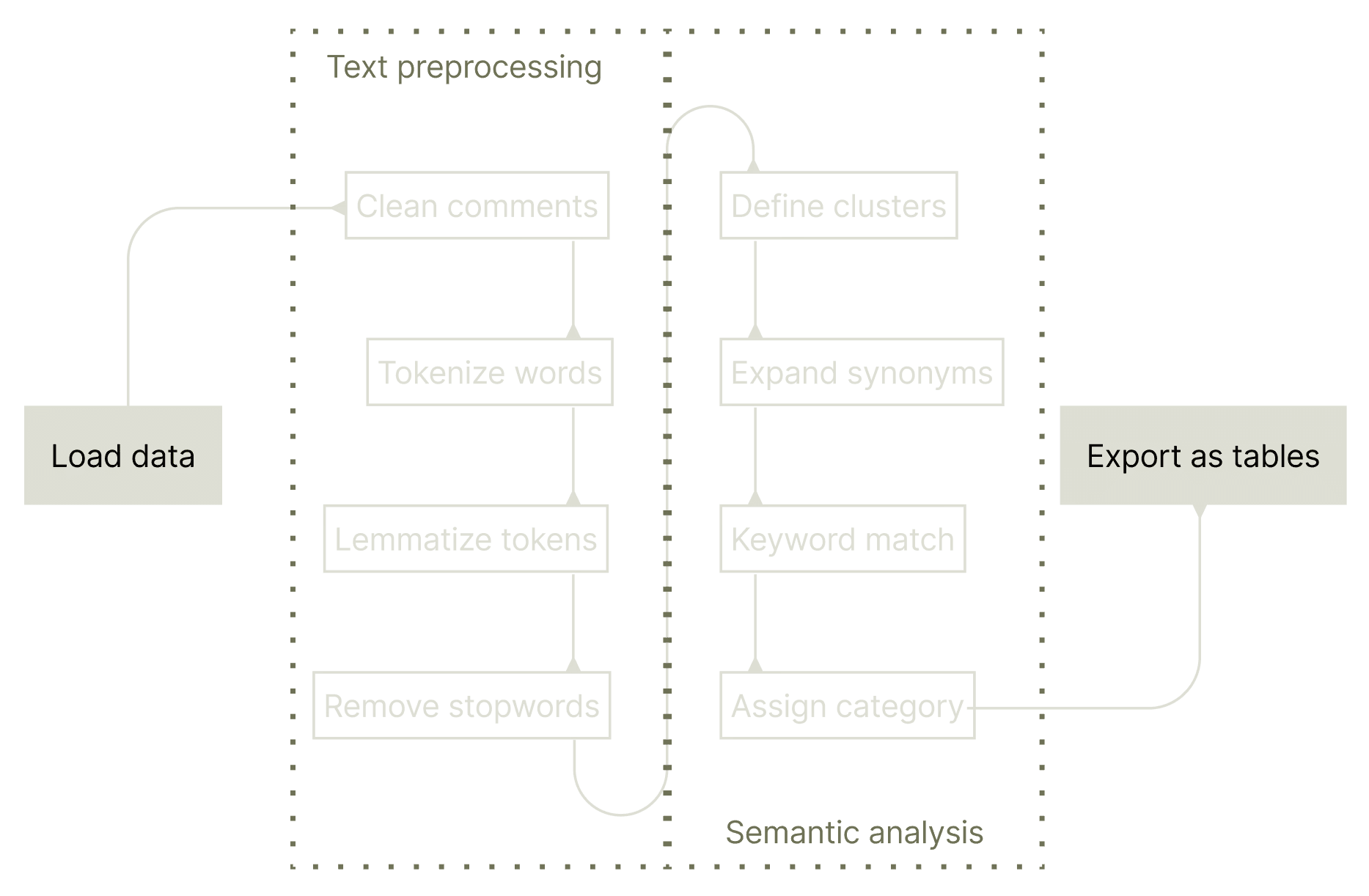
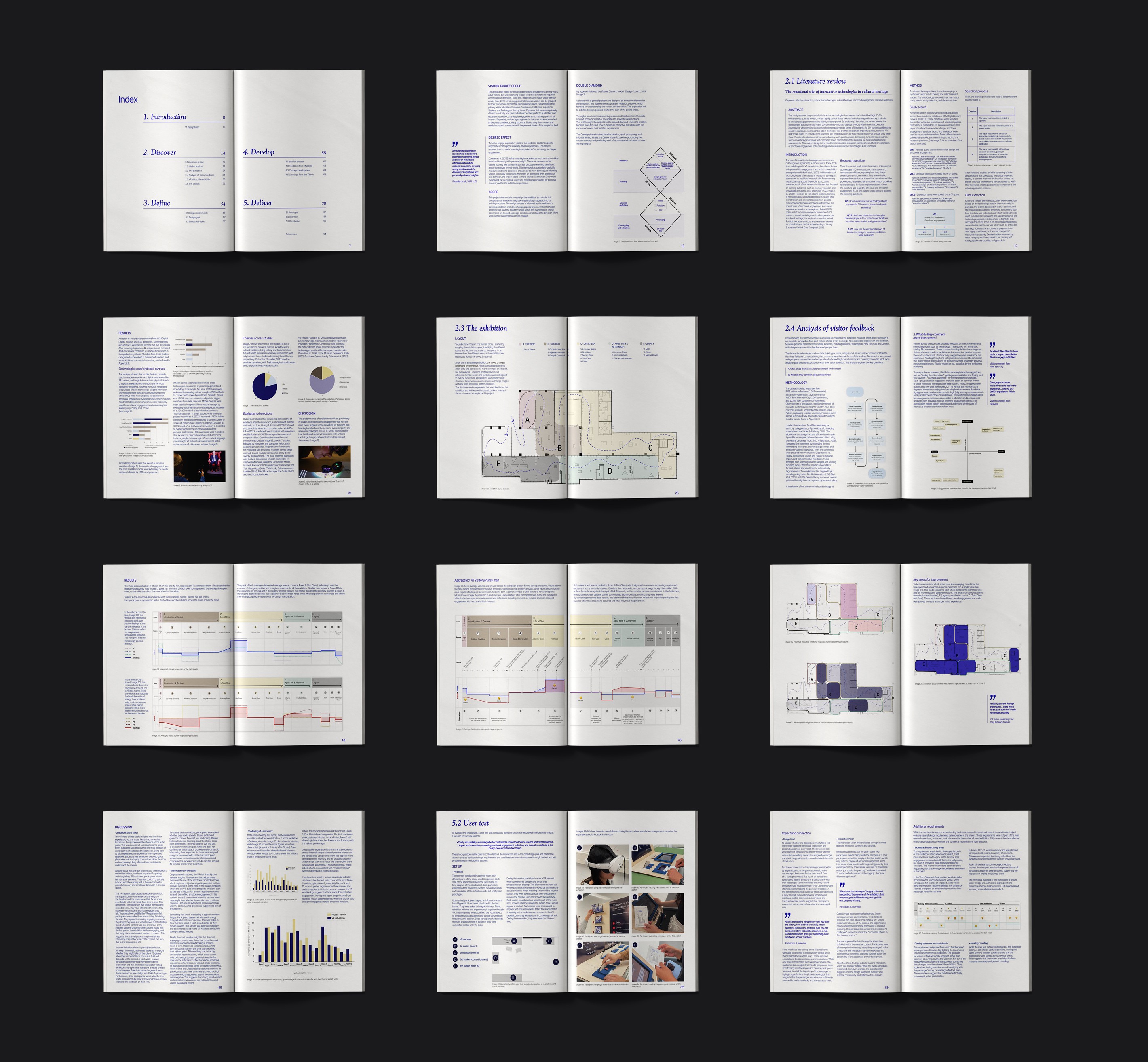
Because of the mentioned constraints, visitor feedback from previous locations was used as a primary source to understand what audiences valued most. Over 40,000 comments from four cities were analyzed using Python (NLTK + Gensim), building a system that automatically sorted feedback into themes. A clear pattern emerged: visitors wanted to “feel like being on the ship” and to connect with a passenger’s personal story.

Because of the mentioned constraints, visitor feedback from previous locations was used as a primary source to understand what audiences valued most. Over 40,000 comments from four cities were analyzed using Python (NLTK + Gensim), building a system that automatically sorted feedback into themes. A clear pattern emerged: visitors wanted to “feel like being on the ship” and to connect with a passenger’s personal story.

Overview of the data processing workflow used to analyze visitor comments.
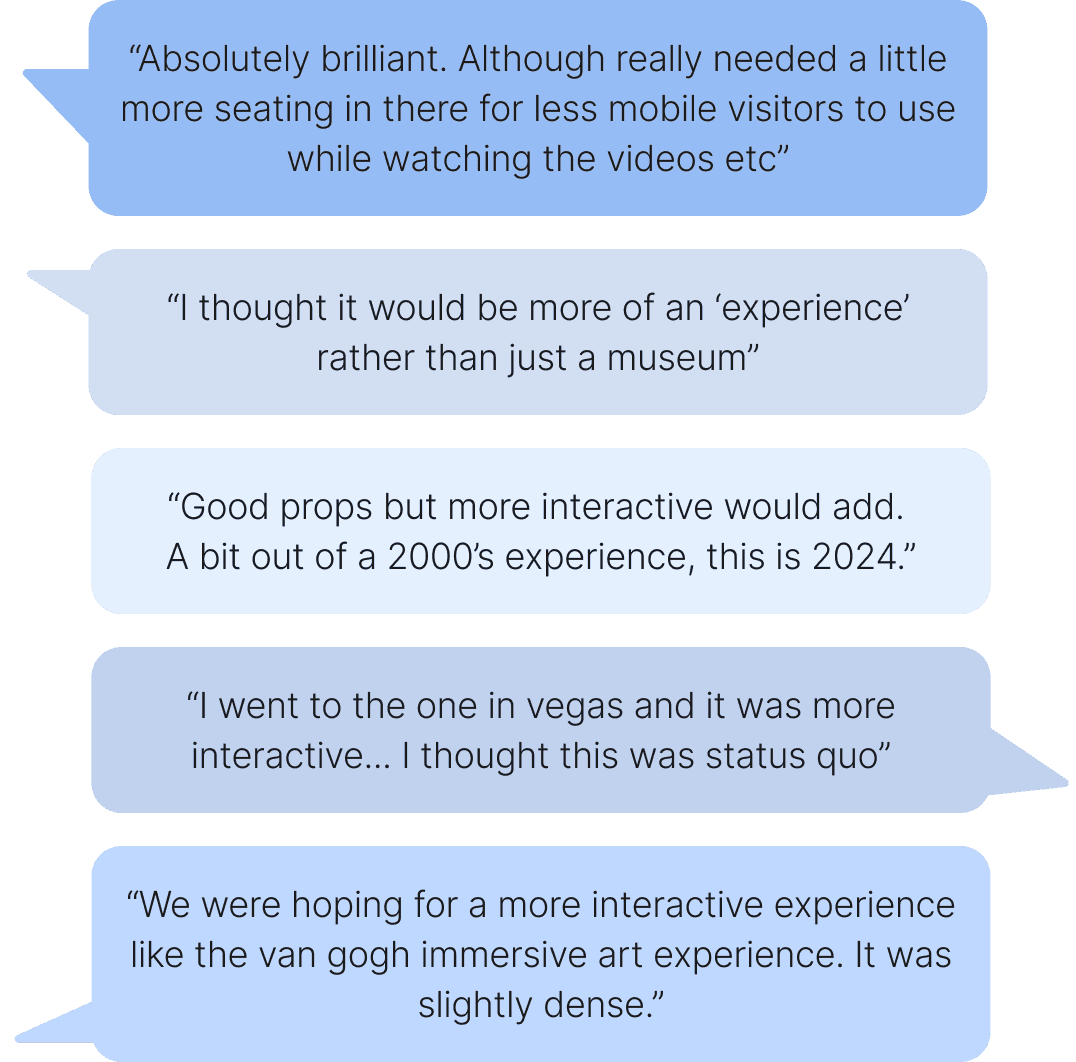
Survey comments that reflect the different categories found.
How do visitors emotionally experience the exhibition?

How do visitors emotionally experience the exhibition?

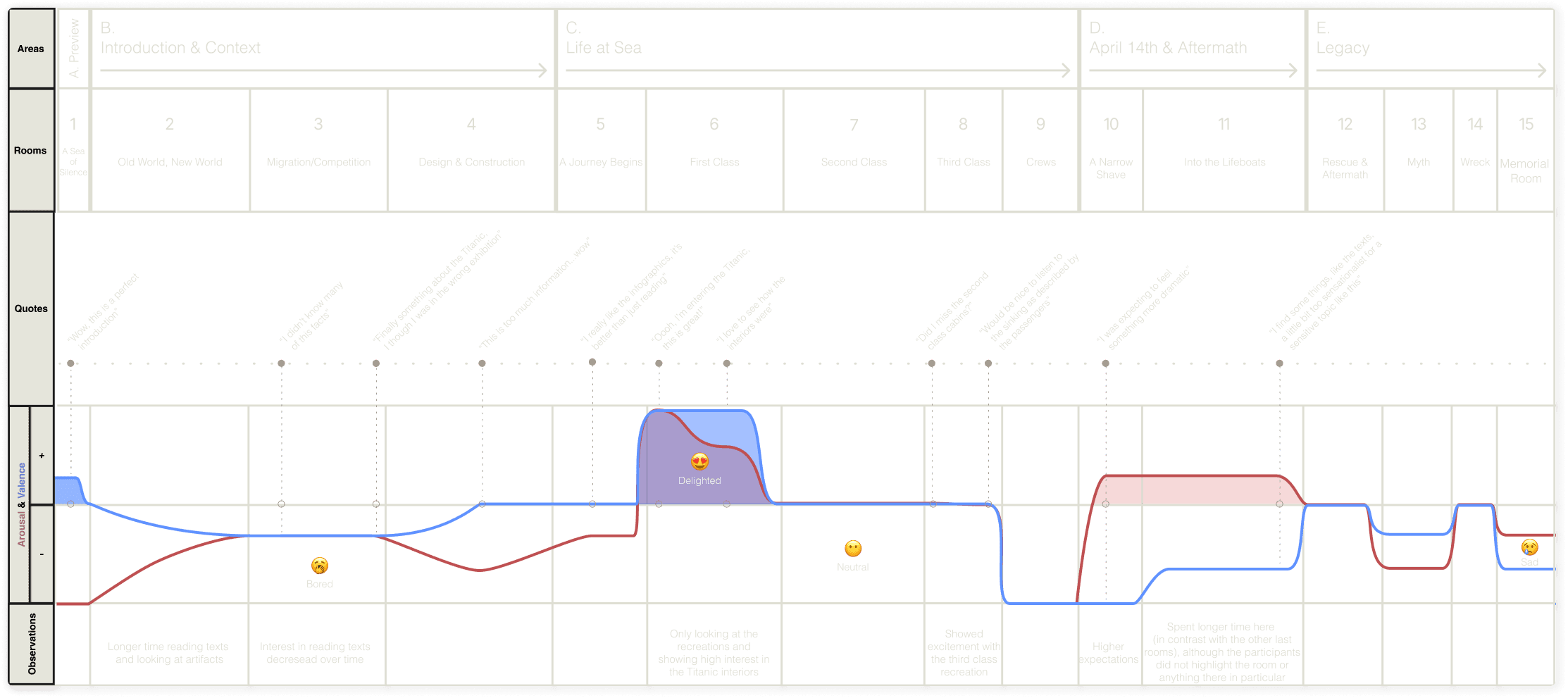
With no opportunity for in-person observation, a virtual reality walkthrough was conducted using Musealia’s Matterport model. This allowed participants to experience the exhibition remotely while preserving its layout and narrative flow. By observing how visitors moved through the space and mapping emotional responses across rooms, moments of high engagement, neutrality, and fatigue were identified, revealing where the experience felt immersive and where emotional connection weakened. Overall, rooms with reconstructions and strong visual elements showed higher engagement, while text-heavy context and legacy areas led to more neutral reactions and signs of fatigue, indicating where emotional connection was weaker.

With no opportunity for in-person observation, a virtual reality walkthrough was conducted using Musealia’s Matterport model. This allowed participants to experience the exhibition remotely while preserving its layout and narrative flow. By observing how visitors moved through the space and mapping emotional responses across rooms, moments of high engagement, neutrality, and fatigue were identified, revealing where the experience felt immersive and where emotional connection weakened. Overall, rooms with reconstructions and strong visual elements showed higher engagement, while text-heavy context and legacy areas led to more neutral reactions and signs of fatigue, indicating where emotional connection was weaker.

Visitor Journey Map where their emotional reactions for valence and arousal are mapped across the exhibition.
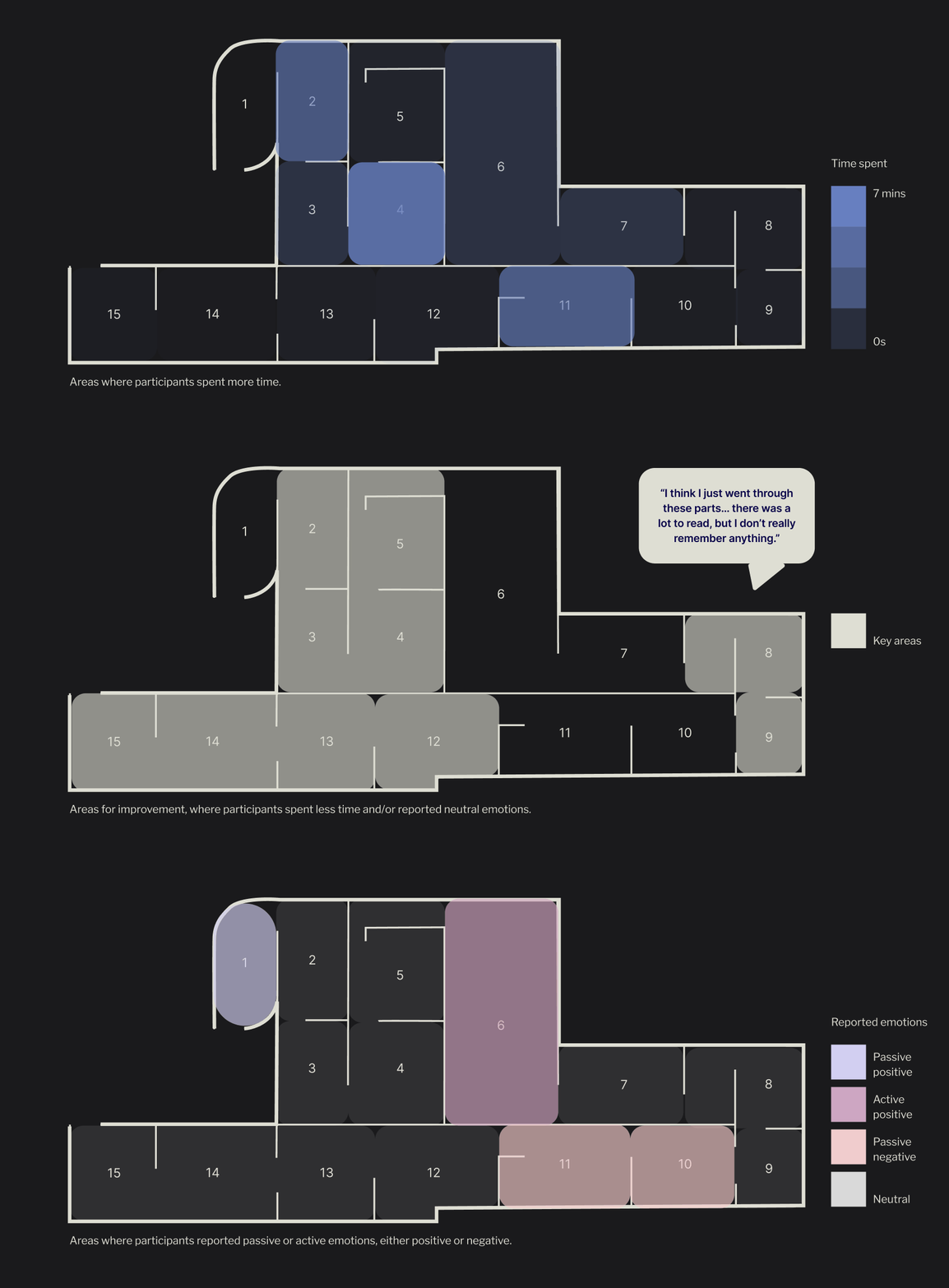
Visitor Journey results mapped over the exhibition layout.

Visitor Journey results mapped over the exhibition layout.

Visitor Journey results mapped over the exhibition layout.

Visitor Journey results mapped over the exhibition layout.

The Result

Based on these insights, I developed a journey where visitors carry a postcard through the exhibition. At seven touchpoints across different rooms, they make simple choices that gradually connect them to one of 16 real Titanic passengers. The system works in three stages.

Based on these insights, I developed a journey where visitors carry a postcard through the exhibition. At seven touchpoints across different rooms, they make simple choices that gradually connect them to one of 16 real Titanic passengers. The system works in three stages.

Based on these insights, I developed a journey where visitors carry a postcard through the exhibition. At seven touchpoints across different rooms, they make simple choices that gradually connect them to one of 16 real Titanic passengers. The system works in three stages.

Based on these insights, I developed a journey where visitors carry a postcard through the exhibition. At seven touchpoints across different rooms, they make simple choices that gradually connect them to one of 16 real Titanic passengers. The system works in three stages.

First · The postcard

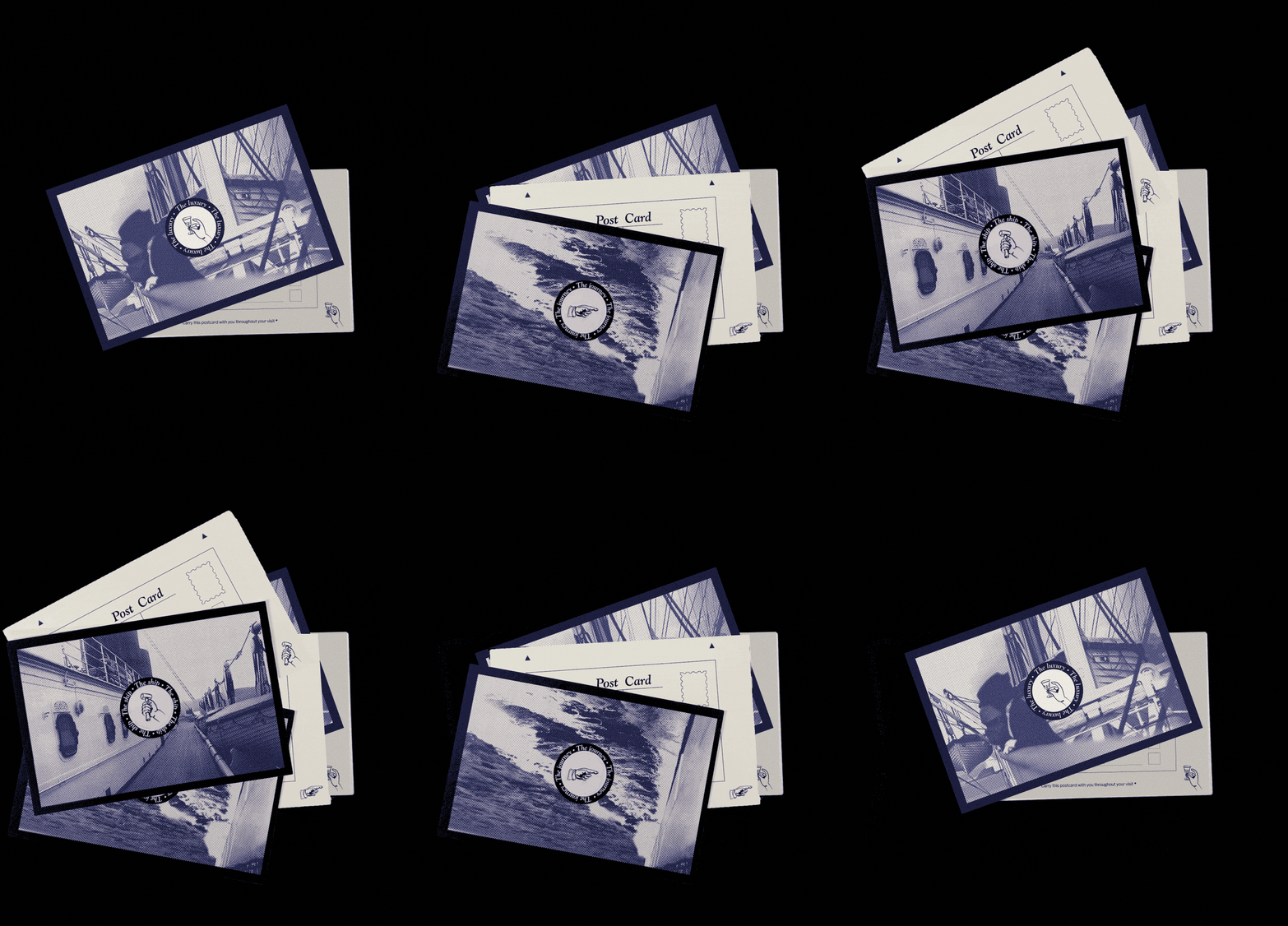
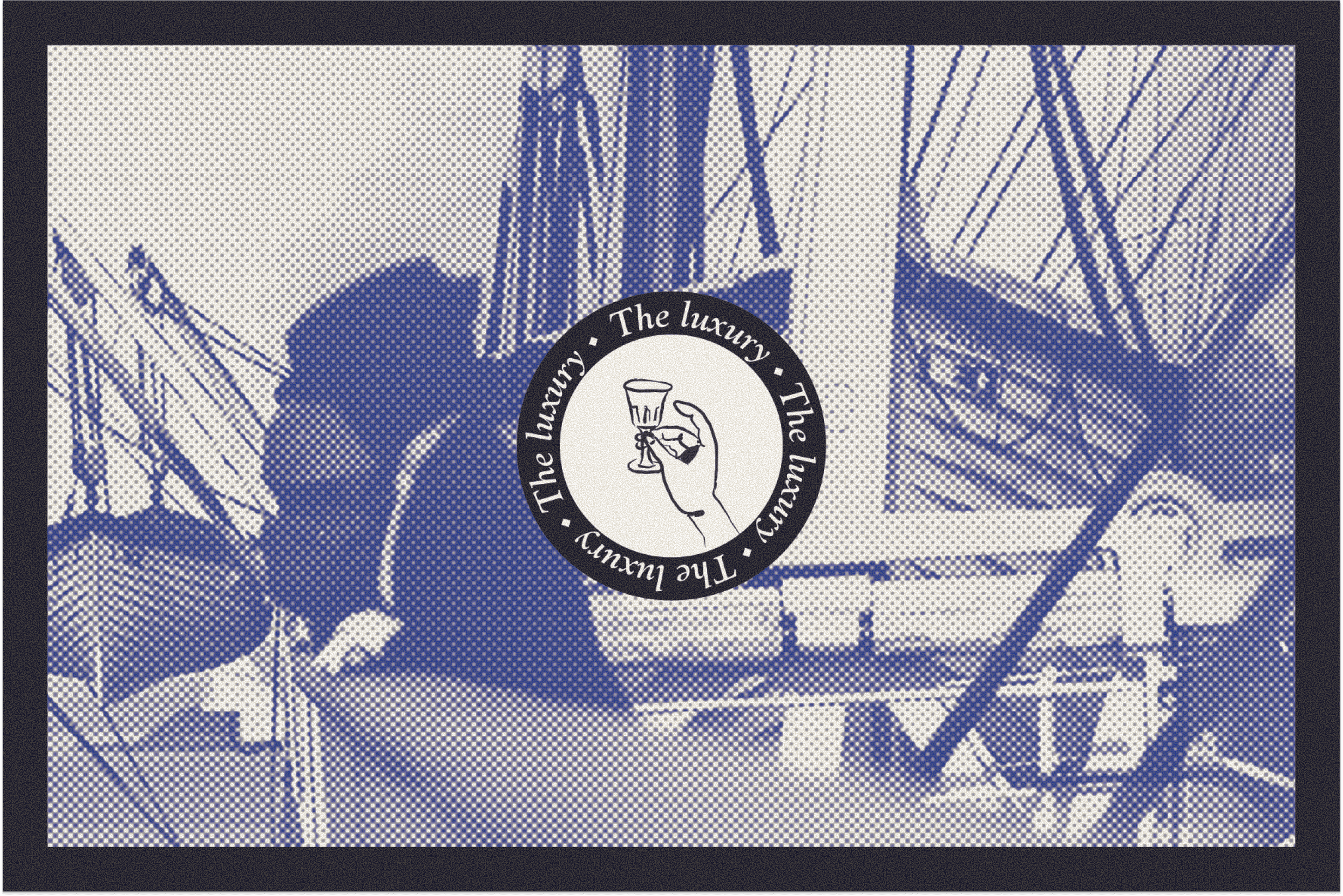
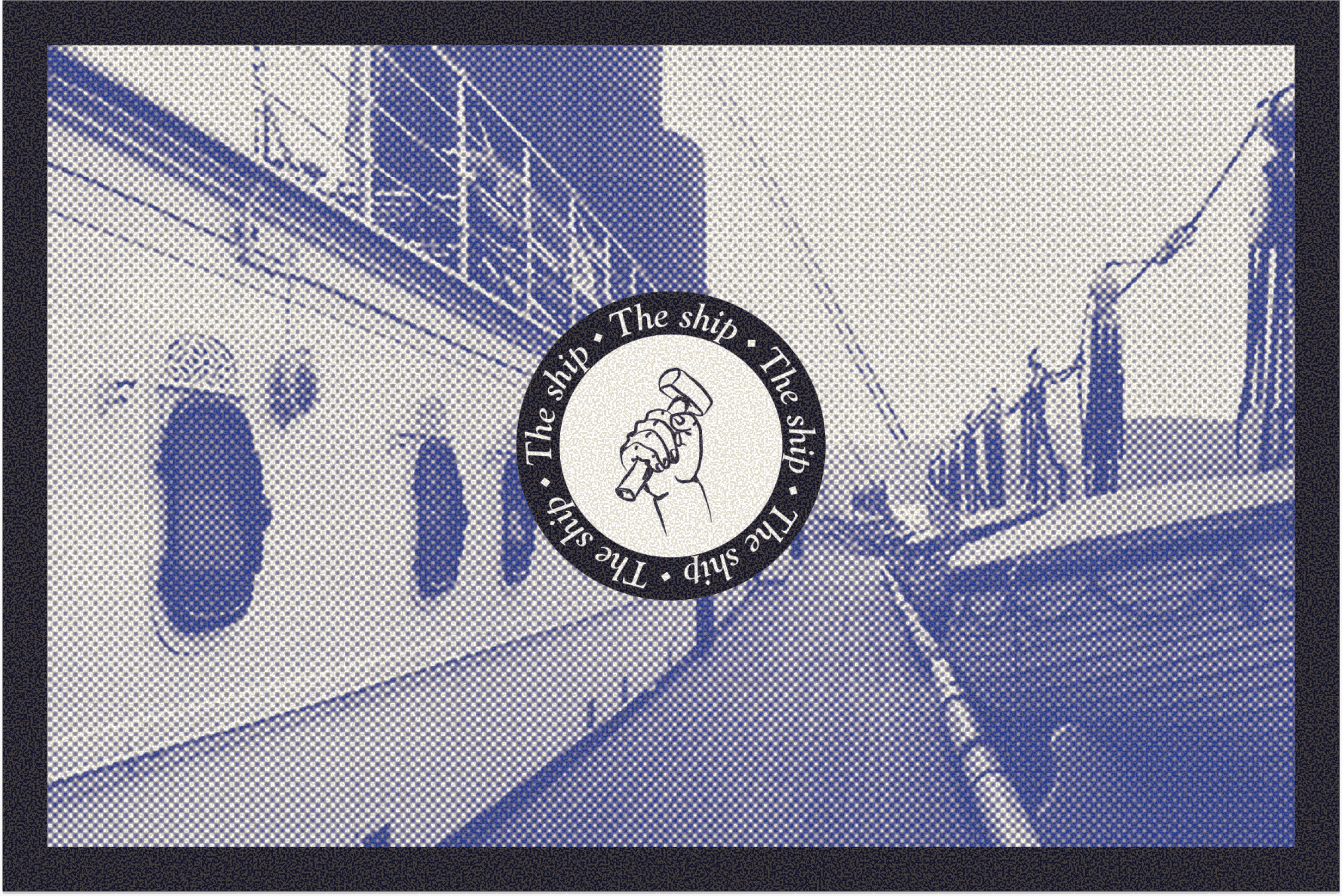
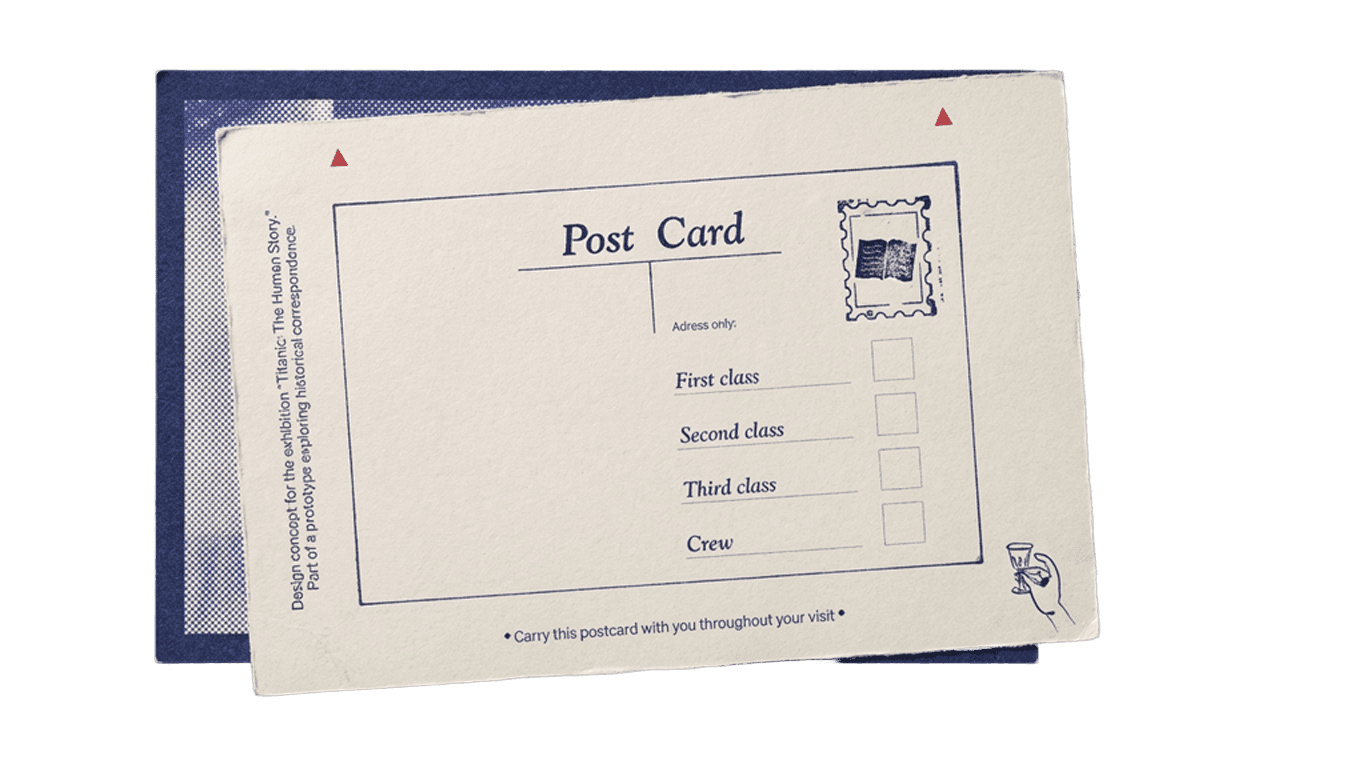
The journey begins where the context of 1912 is introduced, when postcards were commonly used by passengers on ocean liners like the RMS Titanic to share their experiences. Visitors make their first choice: selecting a postcard based on what interests them most about the Titanic story. The ship, the people, the journey, or the luxury. Each theme connects to a different aspect of life aboard.
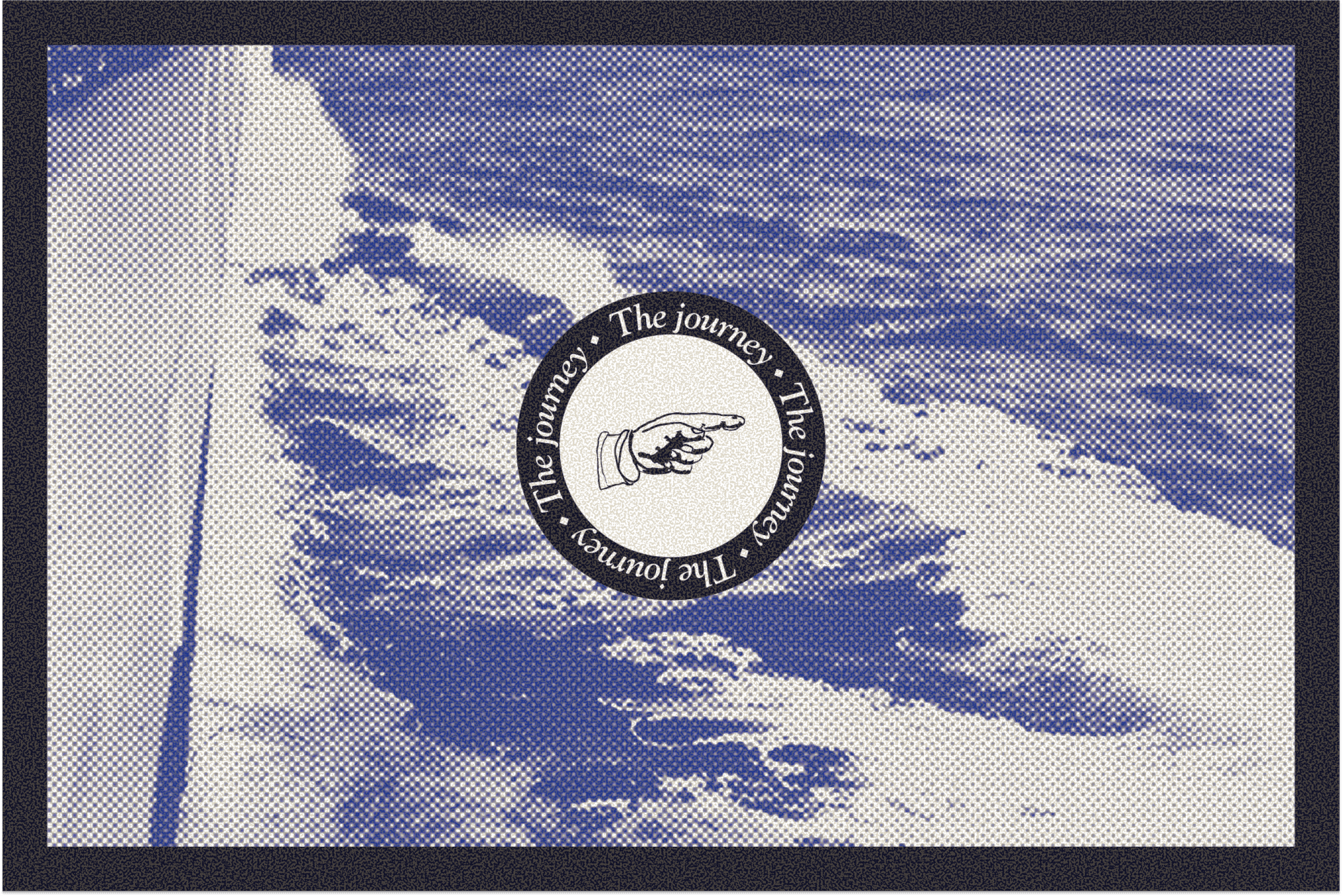
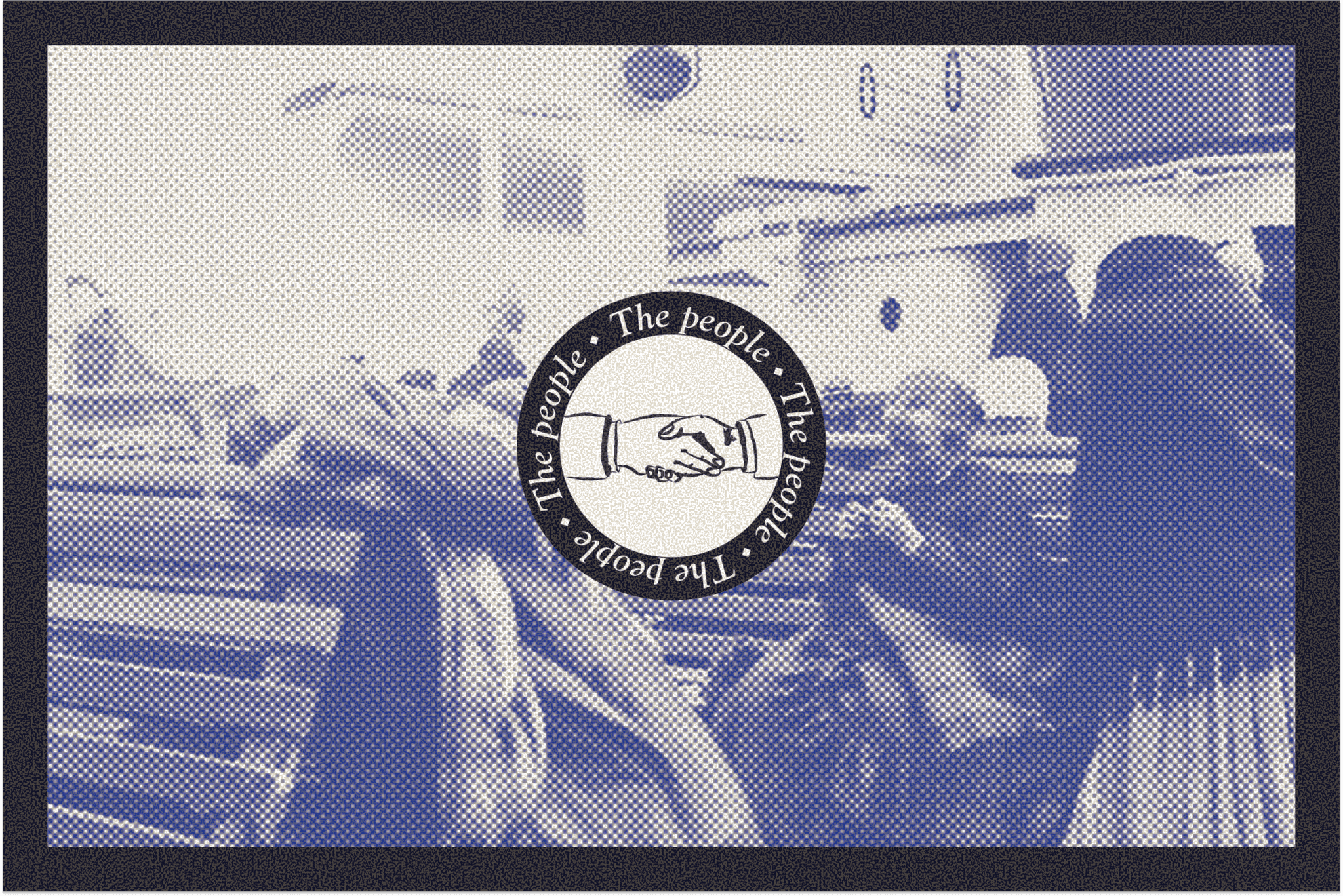
Interactive postcards designed using authentic RMS Titanic photographs. Visistor can choose one of the four themes.

Interactive postcards designed using authentic RMS Titanic photographs. Visistor can choose one of the four themes.

Flexible enough to install,

strong enough to secure.

Second · The stamp and the address

Visitors then walk through the recreated class areas and crew quarters. In each room, they try to stamp their postcard with that location's address. If the address is correct, the stamp unlocks and their passenger appears on screen, with a voice message that points them toward real objects in the exhibition connected to that person's story. If the address is wrong, they continue searching.
Third · Exchanging messages

In the memorial room, visitors insert their postcard and receive a printed message written from their passenger's point of view. The message uses fragments of what that person actually wrote aboard the Titanic. Visitors are then invited to write a reply, which becomes part of a digital archive organized by passenger.

Archive of visitor's postcards

Archive of visitor's postcards

Learnings

Beyond the concept itself, the research methods showed how designing is still possible when the physical space cannot be accessed. Using VR to explore the exhibition remotely helped reveal how people move through the space, where they slow down, and where attention drops, supporting design decisions even without being on site. This approach could also be useful for other traveling exhibitions or visitor experiences where on-location research is limited.

Regarding the concept, the main insight was that small, physical interactions can still create strong engagement. The postcard worked because it felt simple and familiar, and because it slowly became more personal as visitors progressed through the exhibition.

Beyond the concept itself, the research methods showed how designing is still possible when the physical space cannot be accessed. Using VR to explore the exhibition remotely helped reveal how people move through the space, where they slow down, and where attention drops, supporting design decisions even without being on site. This approach could also be useful for other traveling exhibitions or visitor experiences where on-location research is limited.

Regarding the concept, the main insight was that small, physical interactions can still create strong engagement. The postcard worked because it felt simple and familiar, and because it slowly became more personal as visitors progressed through the exhibition.

Beyond the concept itself, the research methods showed how designing is still possible when the physical space cannot be accessed. Using VR to explore the exhibition remotely helped reveal how people move through the space, where they slow down, and where attention drops, supporting design decisions even without being on site. This approach could also be useful for other traveling exhibitions or visitor experiences where on-location research is limited.

Regarding the concept, the main insight was that small, physical interactions can still create strong engagement. The postcard worked because it felt simple and familiar, and because it slowly became more personal as visitors progressed through the exhibition.

Beyond the concept itself, the research methods showed how designing is still possible when the physical space cannot be accessed. Using VR to explore the exhibition remotely helped reveal how people move through the space, where they slow down, and where attention drops, supporting design decisions even without being on site. This approach could also be useful for other traveling exhibitions or visitor experiences where on-location research is limited.

Regarding the concept, the main insight was that small, physical interactions can still create strong engagement. The postcard worked because it felt simple and familiar, and because it slowly became more personal as visitors progressed through the exhibition.